
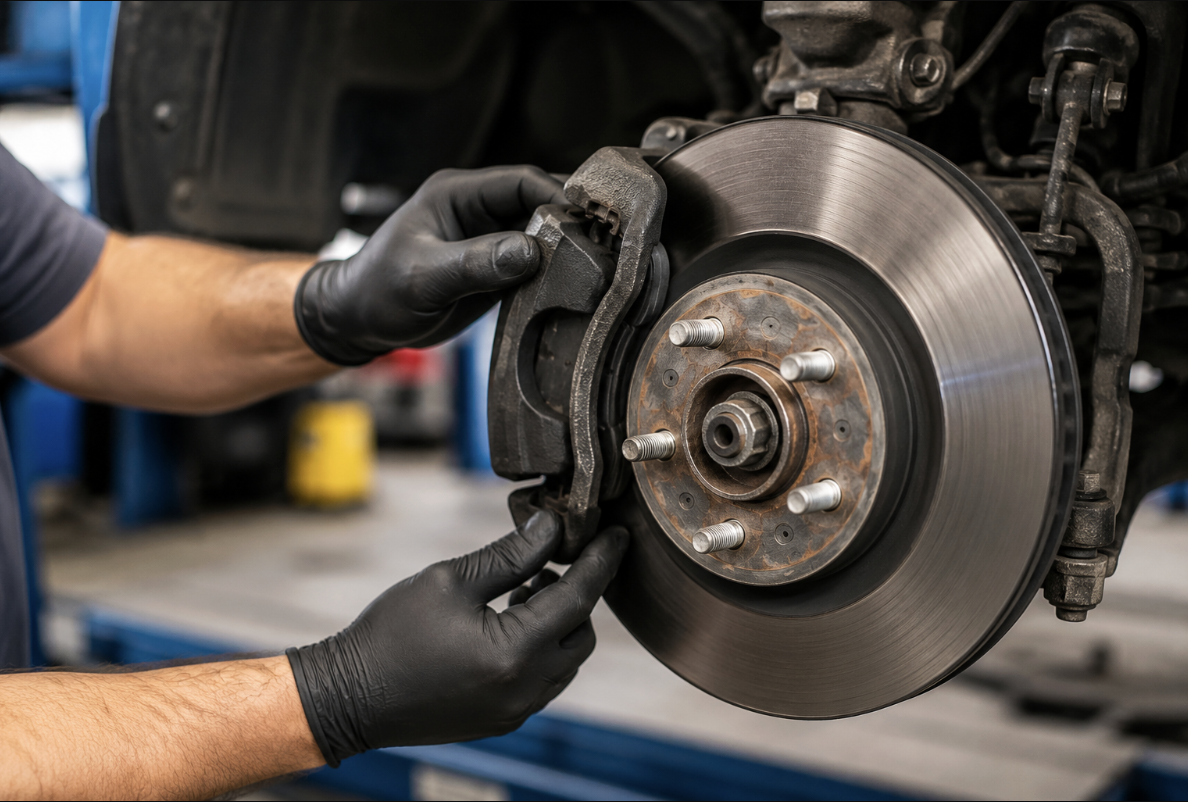
Your brakes are one of the most important safety systems on your vehicle. Unfortunately, many drivers ignore the warning signs until a simple repair turns into a much more expensive one.
At Norvin's Auto Repair in Killeen, Tx, we've seen everything from worn brake pads to rotors that were literally ground in half because the warning signs were ignored. Our goal isn't to scare you—it's to help you recognize the symptoms early so you can stay safe and save money.
Here are seven signs it's time to have your brakes inspected.
1. Your Brakes Are Squealing or Screeching
A high-pitched squealing noise while braking is one of the most common reasons customers visit our shop.
Most of the time, we find that the brake pads have worn down to the wear indicators. This is your vehicle's way of telling you it's time for new brake pads.
The good news? Catching the problem at this stage is usually a straightforward repair.
The bad news? Waiting too long can allow the brake pads to wear completely away, causing metal-on-metal contact. That's when a squeal often turns into a grinding noise—and the repair bill starts climbing.
2. You Hear Grinding When You Stop
Grinding brakes should never be ignored.
We've had customers come in thinking they only needed brake pads, only to discover the pads had worn away completely. In one memorable case, the brake pad had ground nearly halfway through a vented brake rotor.
When damage becomes that severe, it's no longer just about replacing brake pads.
The caliper piston has to extend much farther than it was designed to. If it overextends, it can begin leaking brake fluid, drastically reducing your vehicle's stopping ability.
What could have been a brake pad replacement became a repair involving brake pads, rotors, and additional inspection of the braking system.
3. Your Vehicle Vibrates When You Brake
If your steering wheel or brake pedal shakes when slowing down, your brake rotors may have developed uneven wear.
One misconception we hear often is that rotor resurfacing is no longer necessary.
In reality, if you're installing new brake pads while reusing existing rotors, resurfacing (machining) the rotors provides a fresh, smooth surface that allows the new pads to bed in properly. Without it, uneven pad deposits can lead to brake pulsation and reduced braking performance.
Proper brake service isn't just replacing parts—it's making sure those parts work together correctly.
4. Your Brake Pedal Feels Different
Your brake pedal should feel firm and consistent.
If the pedal suddenly feels soft, spongy, or worse—goes all the way to the floor—stop driving the vehicle immediately.
A brake pedal that drops to the floor indicates your vehicle has little to no effective stopping power and could signal a serious hydraulic problem or brake fluid loss.
This isn't something to "keep an eye on." It needs immediate attention.
5. It Takes Longer to Stop
Many drivers don't notice their braking performance getting worse because it happens gradually.
If you find yourself pressing harder on the pedal or needing more distance to stop than you used to, your braking system should be inspected.
A properly functioning brake system should inspire confidence—not uncertainty.
6. It's Been About a Year Since Your Last Brake Inspection
People often ask us, "How long do brake pads last?"
Our honest answer is: it depends.
An Uber driver who brakes hundreds of times a day will wear through brake pads much faster than someone who only drives occasionally.
Driving habits matter too. Heavy braking, towing, stop-and-go traffic, and aggressive driving all shorten brake life.
Instead of relying solely on mileage, we recommend following your vehicle's scheduled maintenance intervals and having the brakes inspected regularly.
That's one reason every vehicle that comes through our shop receives a 12-point inspection.
Even if you're visiting for something unrelated, we want you to understand the overall health of your vehicle and catch safety concerns before they become expensive repairs.
7. You're Ignoring Small Warning Signs
One of the biggest lessons we've learned over the years is that preventative maintenance almost always costs less than waiting.
One customer came in after driving with metal-on-metal brakes for too long.
What should have been a simple brake pad replacement had turned into replacing brake pads, rotors, a damaged brake caliper, and performing a brake fluid service after bleeding the system.
The opposite side also needed new pads and rotors so both sides of the vehicle would wear evenly and perform consistently.
All of that could have been avoided by addressing the problem earlier.
A Simple Driving Habit That Can Extend Brake Life
If we could give every driver one piece of advice, it would be this:
Don't wait until the last second to brake. Start braking earlier.
Gradual braking reduces wear on your brake pads and rotors, keeps your vehicle under better control, and helps your braking system last longer.
Why Drivers Choose Norvin's Auto Repair
We believe trust is just as important as technical skill.
That's why we focus on transparency.
When we inspect your brakes, we often take photos and videos so you can see exactly what we're seeing. If needed, we'll even bring you into the shop and show you the worn parts ourselves.
Our goal isn't to pressure anyone into repairs.
We'll explain what needs immediate attention, what can safely wait, and why. We believe informed customers make better decisions, and your safety will always come before making a sale.
Schedule Your Brake Inspection Before a Small Problem Becomes a Big One
If your brakes are squealing, grinding, vibrating, or simply don't feel right, don't wait until you're facing a much larger repair.
At Norvin's Auto Repair, we're committed to honest recommendations, transparent inspections, and helping drivers throughout Killeen stay safe on the road.
A quick brake inspection today could save you hundreds of dollars tomorrow—and more importantly, help keep you and your family safe.