
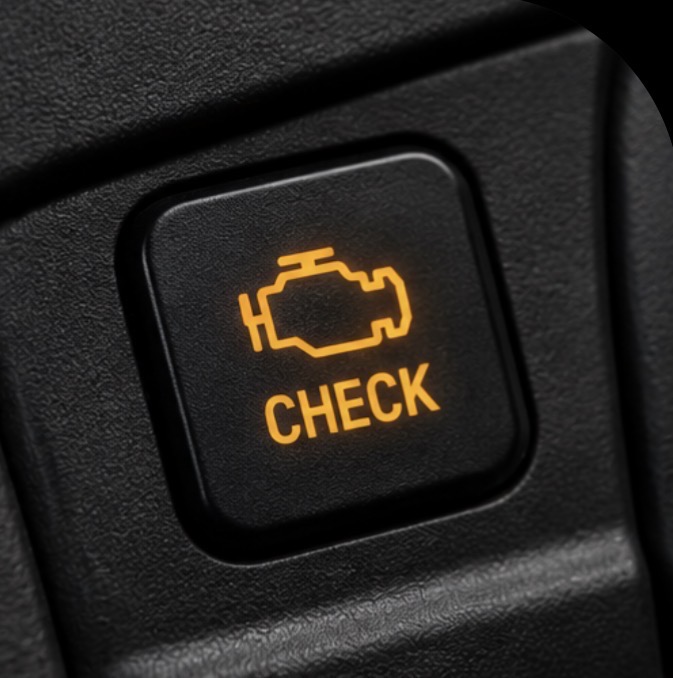
Few dashboard warnings cause more anxiety than the check engine light. Whether it comes on while you're driving to work or appears after starting your vehicle, it's natural to wonder if it's something minor or a major engine problem.
The truth is, the check engine light can be triggered by hundreds of different issues. Some are simple, while others require immediate attention.
At Norvin's Auto Repair in Killeen, TX, we perform professional check engine light diagnosis to identify the actual cause of the problem instead of simply replacing parts based on a trouble code.
What Does the Check Engine Light Mean?
Your vehicle's computer constantly monitors the performance of the engine, transmission, fuel system, emissions system, ignition system, and many other components.
When it detects a problem outside of normal operating conditions, it stores a Diagnostic Trouble Code (DTC) and turns on the check engine light.
That light is your vehicle's way of saying:
"Something isn't working correctly. It's time to have me checked."
The Most Common Reasons Your Check Engine Light Is On
1. A Loose or Damaged Gas Cap
One of the simplest causes is a loose, damaged, or missing gas cap.
A poor seal can allow fuel vapors to escape, triggering an emissions-related fault.
If you recently filled up, tighten the gas cap until it clicks several times. If the light doesn't turn off after a few trips, the vehicle should be diagnosed.
2. Worn Spark Plugs or Ignition Coils
Spark plugs and ignition coils help ignite the air and fuel mixture inside your engine.
When they begin to fail, your vehicle may experience:
- Rough idle
- Loss of power
- Poor fuel economy
- Engine misfires
- Check engine light
Ignoring a misfire can eventually damage your catalytic converter, leading to a much more expensive repair.
3. Faulty Oxygen Sensors
Oxygen sensors measure how much oxygen remains in the exhaust and help your engine maintain the correct fuel mixture.
A failing oxygen sensor may cause:
- Lower fuel economy
- Rough running
- Increased emissions
- Check engine light
4. EVAP System Leaks
The EVAP (Evaporative Emissions) system prevents fuel vapors from escaping into the atmosphere.
Even a small leak in the system can trigger the check engine light.
These leaks often require specialized diagnostic equipment to locate accurately.
5. Mass Air Flow (MAF) Sensor Problems
The mass air flow sensor measures the amount of air entering your engine.
When it fails, your vehicle may experience:
- Hard starting
- Hesitation during acceleration
- Poor performance
- Reduced fuel economy
6. Catalytic Converter Problems
The catalytic converter helps reduce harmful emissions.
If it begins to fail, you may notice:
- Reduced engine power
- Sulfur or "rotten egg" smell
- Poor acceleration
- Check engine light
This is one repair you don't want to ignore, as replacement can be costly.
7. Engine Misfires
An engine misfire occurs when one or more cylinders fail to burn fuel correctly.
Symptoms often include:
- Shaking while driving
- Rough idle
- Flashing check engine light
- Lack of power
A flashing check engine light means you should reduce driving and have the vehicle inspected as soon as possible to help prevent damage to the catalytic converter.
A Diagnostic Code Is Only the Starting Point
One of the biggest misconceptions is that plugging in a scan tool tells you exactly what's wrong.
It doesn't.
A trouble code identifies the system where the problem was detected, but it doesn't automatically identify the failed part.
For example, a code related to an oxygen sensor doesn't always mean the oxygen sensor is bad. It could be caused by a vacuum leak, exhaust leak, wiring issue, fuel delivery problem, or another underlying issue.
Replacing parts based solely on a code can become expensive very quickly.
That's why professional diagnostics matter.
Our Diagnostic Process
At Norvin's Auto Repair, we don't believe in guessing.
Our technicians use professional diagnostic equipment, service information, and real-world testing to identify the root cause of your check engine light.
Depending on the issue, diagnostics may include:
- Reading Diagnostic Trouble Codes (DTCs)
- Reviewing live sensor data
- Electrical testing
- Smoke testing for vacuum or EVAP leaks
- Fuel system testing
- Ignition system testing
- Visual inspection of related components
Our goal is to repair the actual problem—not just replace parts until the light turns off.
Should You Keep Driving?
It depends.
If the check engine light is solid:
The vehicle may still be safe to drive for a short period, but you should schedule a diagnosis as soon as possible. Delaying repairs can allow a small issue to become a much larger one.
If the check engine light is flashing:
A flashing check engine light usually indicates an active engine misfire or another serious condition that could damage the catalytic converter.
Reduce driving if possible and have the vehicle inspected promptly.
Preventing Check Engine Light Problems
While not every issue can be prevented, regular maintenance greatly reduces the risk of unexpected repairs.
Routine maintenance includes:
- Oil changes
- Spark plug replacement
- Air filter replacement
- Fluid inspections
- Battery testing
- Cooling system inspections
- Regular vehicle inspections
At Norvin's Auto Repair, every visit includes our 12-point inspection, allowing us to identify potential problems before they become expensive breakdowns whenever possible.
Why Drivers Choose Norvin's Auto Repair
When your check engine light comes on, you deserve answers—not guesses.
At Norvin's Auto Repair, we take the time to properly diagnose your vehicle, explain our findings in plain language, and recommend only the repairs your vehicle actually needs.
We know you rely on your vehicle every day, and we're committed to helping you make informed decisions with honest, transparent service.
Schedule Your Check Engine Light Diagnosis in Killeen, TX
If your check engine light is on, don't ignore it.
Whether it's a loose gas cap, an engine misfire, or a more complex electrical issue, the sooner it's diagnosed, the better your chances of preventing more expensive repairs.
Schedule your diagnostic appointment with Norvin's Auto Repair today and let us find the real cause of your check engine light—so you can get back on the road with confidence.